

When I think about Dior Cruise 2026, the first thing that comes to mind isn’t just the stunning clothes—though there were plenty of those. It’s the chaos, the creativity, the quiet magic that happens before the lights come up, the models step out, and the world sees the collection for the first time. I was lucky enough to get a peek behind the curtain of this year’s show, held in Rome’s elusive Villa Albani Torlonia—a private 18th-century estate filled with neoclassical statues and hidden gardens that felt like a time capsule. What I saw wasn’t just a fashion show in the making; it was a love letter to Rome, to art, to cinema, and to the women who shape culture. It was messy, it was intense, it was filled with tiny, perfect details that most people will never notice—and that’s exactly what made it so special. Let me take you behind the scenes of Dior Cruise 2026, where fantasy met reality, and fashion became art.
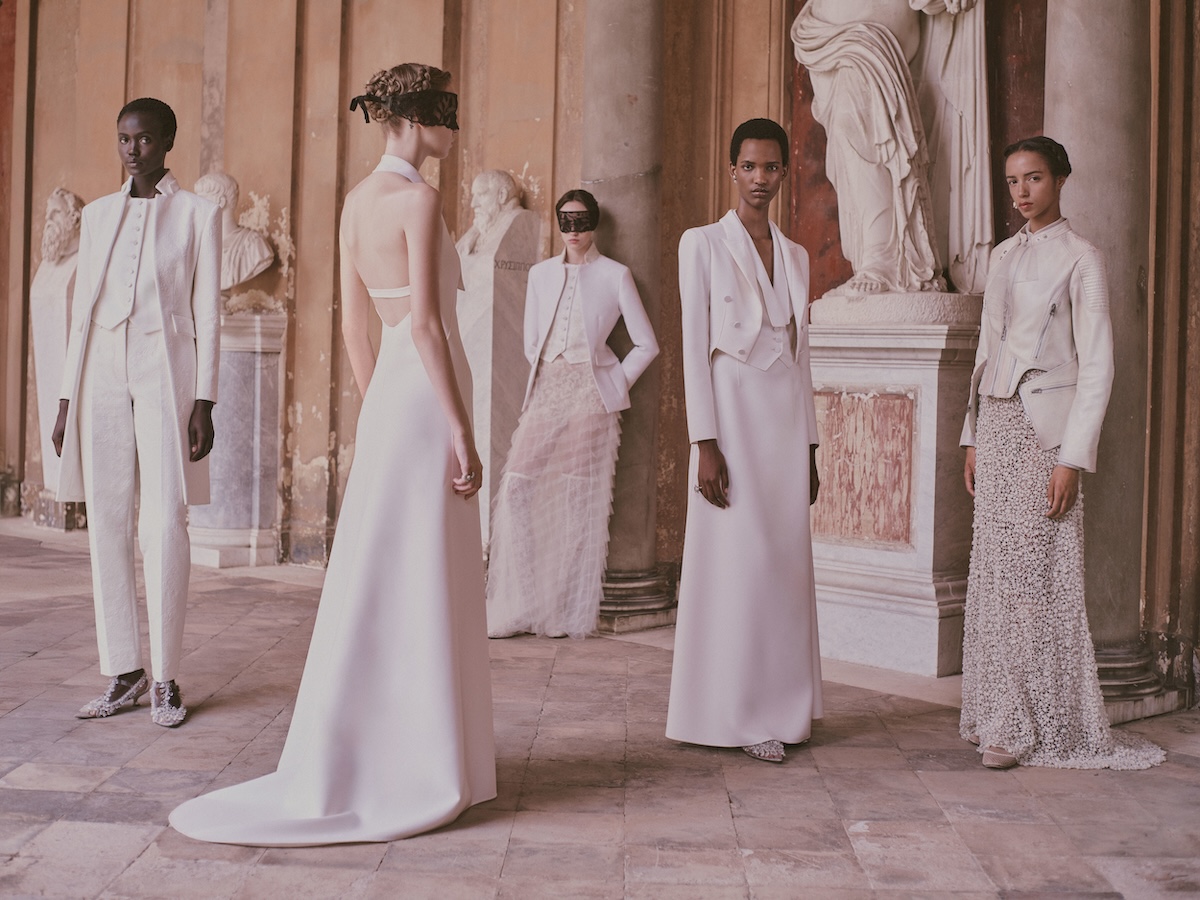
First, let’s set the scene: Rome, a cool spring evening, with a light mist hanging over the villa’s gardens and the soft glow of string lights twinkling between the statues. The show was months in the making, but the final 48 hours were a whirlwind of activity. When I arrived, the team was still setting up the open-air runway, which wound through the villa’s grounds, past ancient artifacts and under canopies strung with white fabric. Crew members rushed around with clipboards, adjusting lighting, steaming dresses, and coordinating with the actors—yes, actors—who would wander the space in period costumes, blurring the line between fashion show and performance. It wasn’t just a runway; it was a theatrical experience, and every detail was intentional.
At the heart of it all was Maria Grazia Chiuri, Dior’s creative director and the visionary behind the collection. I spotted her huddled with her team near a rack of dresses, her voice calm but firm as she adjusted the lace trim on a sheer white gown. She kept repeating one phrase: “It’s about balance—rigor and imagination, past and present.” That balance was everywhere, if you knew where to look. The collection, she told me, was inspired by Mimi Pecci Blunt, a charismatic 20th-century art patron who hosted legendary balls in Rome and once ran the Teatro della Cometa—a theater Chiuri recently helped restore. “This isn’t just about clothes,” she said, brushing a strand of hair from her face. “It’s about honoring the women who shaped art and culture, who blurred the lines between reality and fantasy. That’s what Mimi did, and that’s what we’re doing here.”
Walk backstage, and you’ll find the real magic: the ateliers, the seamstresses, the craftspeople who turned Chiuri’s vision into reality. Racks upon racks of dresses lined the walls—some in crisp white linen, others adorned with delicate bas-relief embroidery, and a few in rich velvet, punctuated with red trims that nodded to Roman military style. One table was covered in lace masks, tiny and intricate, meant to evoke the elegance of Italian balls; another held rows of ballet flats and Lady Dior bags, reimagined with enamel and cascading fringes. I watched a seamstress hand-stitch floral details onto a silk gown, her fingers moving with precision that only years of practice can bring. “Each piece takes weeks,” she told me, smiling as she worked. “We don’t rush. This is art, not fast fashion.” It was a reminder that behind every Dior piece is hours of care, skill, and passion—something you can’t see from the front row.
The beauty team was just as busy, crafting looks that felt both timeless and ethereal. Peter Philips, Dior’s makeup creative director, was touching up a model’s face, his hands steady as he applied a soft, luminous foundation. “The makeup is all about purity,” he explained, dabbing a subtle highlighter on her cheekbones. “We wanted the models to look like marble statues—glowing, serene, like they’re walking between the living and the ‘ghosts’ of the past.” The hair, styled in sleek braided chignons, echoed the elegance of Roman ladies, while the lace eye masks added a touch of mystery. It wasn’t over-the-top; it was understated, intentional, and designed to let the clothes shine—a lesson in restraint that so many fashion shows forget.
One of the most surprising things about the behind-the-scenes chaos was how calm everyone was, even as the show’s start time crept closer. The models, in their white robes, chatted quietly as they waited to get dressed, sipping water and laughing with the stylists. I saw one model practicing her walk in a pair of the collection’s ballet flats, her movements graceful but relaxed—no stiff, robotic strutting here. “Maria wants us to feel like we’re part of the story,” one model told me, adjusting her robe. “It’s not about looking perfect; it’s about feeling like we belong in this world she’s created—between Rome’s past and present.” That energy was contagious; even the crew members, rushing to fix a loose thread or adjust a light, had a smile on their faces. This wasn’t just a job for them—it was a labor of love.
As the sun set and the mist grew thicker, the final touches were made. The Roma Sinfonietta Orchestra took their places, their instruments tuned and ready to fill the garden with music. The actors, dressed in period costumes from Rome’s famous Tirelli atelier—some in 1700s gowns, others in 1920s suits—took their positions, their faces masked and their movements slow, like ghosts wandering through time. Chiuri took one last walk down the runway, pausing to adjust a flower arrangement and whisper a few words to a crew member. For a moment, everything was quiet—a calm before the storm of cameras and applause.
When the first model stepped out, wearing a white linen dress with a men’s-style vest and delicate lace details, the crowd fell silent. But backstage, it was a different story: crew members watched with pride, seamstresses wiped away tears, and Chiuri stood with a small smile, her arms crossed. This wasn’t just a fashion show; it was the culmination of months of work, a celebration of art, culture, and the women who inspire it all. The collection blurred the lines between ready-to-wear and haute couture, between past and present, between reality and fantasy—just as Chiuri had intended. And every detail, from the lace masks to the velvet gowns to the music, was a nod to Rome’s rich history and Mimi Pecci Blunt’s legacy.
After the show, as the crowd mingled and the models celebrated, I wandered backstage one last time. The racks were emptying, the makeup stations were being packed up, and the crew was laughing as they recounted the day’s chaos. But among the mess, there were little reminders of the magic: a discarded lace mask, a spool of golden thread, a note from Chiuri that read, “We didn’t just make clothes—we told a story.”
That’s what makes Dior Cruise 2026 so special—not just the clothes, but the story behind them. It’s the seamstresses who spend weeks hand-stitching a single dress, the makeup artists who craft looks that feel like art, the team that turns a historic villa into a theatrical wonderland, and Chiuri, who weaves her passion for art and women into every piece. Behind the glitz and glamour of the runway is a world of hard work, creativity, and heart—a world that most people never get to see. But once you do, you realize that fashion isn’t just about what you wear; it’s about the stories you tell, the people you honor, and the magic you create along the way.
Dior Cruise 2026 wasn’t just a show. It was a love letter to Rome, to art, to craftsmanship, and to the quiet magic that happens behind the scenes. And that’s the true beauty of it—something you can’t capture in a photo or a video, but something you feel, deep down, when you’re lucky enough to be part of it. It’s a reminder that fashion is more than fabric and thread; it’s art, it’s history, it’s passion—and it’s the people who bring it to life that make it unforgettable.